Single Tooth Implants
A titanium post placed in the jaw replaces one missing tooth root, topped with a custom crown — without touching the healthy teeth on either side.
Explore Single Tooth Implants4444 Connecticut Ave NW #106 · Washington, DC

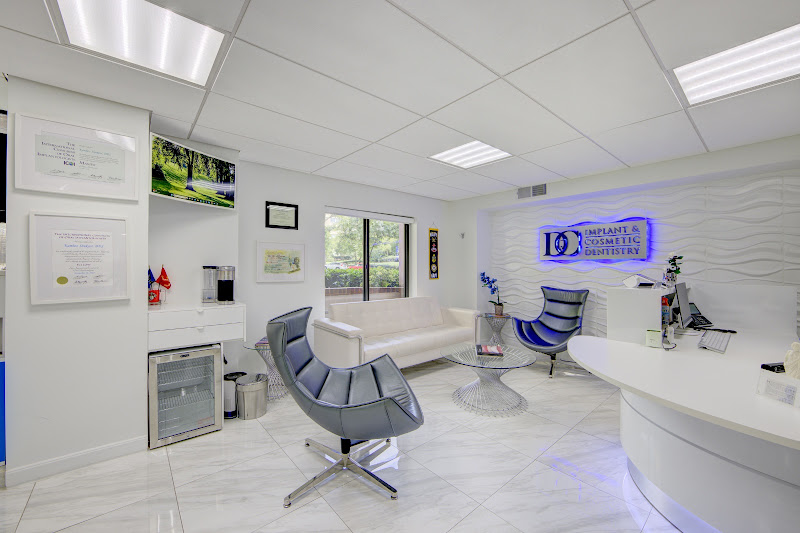
Implants & Oral Surgery
Dr. Kambez Shukoor provides the full range of implant and oral surgery care under one roof — from replacing a single missing tooth to full-arch reconstruction, plus the grafting, extractions, and sedation that go with it, all performed in our Washington, DC office.

Google Rating
4.9 · 303 reviews
Availability
Same-day consults
Payments
Financing available
Start Here
Dental implants are titanium posts placed into the jawbone to replace missing tooth roots, topped with a crown, bridge, or full arch of teeth. In Washington, DC, DC Implant & Cosmetic Dentistry provides the entire range in one office — single tooth through full-mouth reconstruction, along with the bone grafting, extractions, and sedation that surround it.
Below, every implant and oral surgery procedure we perform is grouped by what you're actually trying to solve. If you'd rather start with the fuller explanation of how an implant works before choosing, read single tooth dental implants first — it covers the anatomy and the process in depth.
A dental implant replaces more than the part of a tooth you can see. The small titanium post sits in the jawbone where the missing root used to be. Above it, an abutment connects the post to the restoration: a crown for one tooth, a bridge for several missing teeth, or an arch supported by multiple implants. The post provides the foundation; the restoration is the part you see and chew with.
After placement, the bone fuses to the implant during healing. This process is called osseointegration. It takes time, which is why placing an implant and delivering the finished tooth are usually separate stages. The healing period is part of building that foundation, not simply a wait for the crown to be made. Dr. Shukoor follows the site as it heals before moving to the final restoration.
Replacing the root matters because an implant helps preserve the bone at the missing-tooth site. It also supports the replacement independently of the healthy teeth beside the gap. A traditional bridge relies on those neighboring teeth being prepared for crowns; a single implant does not require them to be ground down. For someone with healthy teeth on either side, leaving that tooth structure alone is an important part of the discussion.
The support also changes how replacement teeth behave while eating. Rather than resting only on the gums, an implant-supported restoration is anchored to posts in the bone. Whether the plan calls for one crown or a larger restoration, the goal is stable support for chewing. The number and position of implants depend on the gaps, the available bone, and the restoration being planned.
Category 01
How many teeth are missing, and where, decides everything. These five pages cover the full range, from one gap to a complete arch supported by implants.
A titanium post placed in the jaw replaces one missing tooth root, topped with a custom crown — without touching the healthy teeth on either side.
Explore Single Tooth ImplantsTwo or more missing teeth restored either with individual implants or with an implant-supported bridge spanning the gap.
Explore Multiple TeethThe overview of full-arch restoration — where All-on-4, All-on-6, and implant-supported dentures are compared before you pick a route.
Explore Full Mouth Arch ImplantsA fixed arch of teeth on four implants, with the back two angled to use available bone — often without a sinus lift, and with same-day temporary teeth.
Explore All-on-4The same fixed arch on six implants, spreading bite force further back — the plan for heavy bites, larger arches, and zirconia prosthetics.
Explore All-on-6A denture that snaps onto two to four implants: stable and adhesive-free while worn, still removed by you each day for cleaning.
Explore Implant-Supported DenturesCategory 02
If you already have an implant and something has gone wrong — loose, painful, a chipped crown, or one placed elsewhere that needs evaluating — start here rather than with a new-treatment page.
Extractions, implant placement, and a fixed provisional arch in a single appointment, for patients who qualify on bone and health.
Explore Teeth in a DayDiagnosis first: 3D imaging identifies whether the problem is the crown, the abutment, or the implant itself, then only what has actually failed is repaired or replaced.
Explore Implant RepairCategory 03
Not every mouth is ready for an implant on day one, and not every oral surgery is about implants. These pages cover the groundwork procedures and the standalone surgical care we provide.
Rebuilding lost bone volume at a missing-tooth site so there is enough healthy bone to hold an implant securely.
Explore Bone GraftingAdds vertical bone height in the upper back jaw by gently raising the sinus floor, where the bone is naturally thinnest.
Explore Sinus LiftRestores width to a jaw ridge that has collapsed or flattened after a tooth has been missing for a long time.
Explore Ridge AugmentationReshapes gum and sometimes bone tissue to expose more tooth — for a crown or filling below the gumline, or to correct a gummy smile.
Explore Crown LengtheningRemoving a tooth that cannot be saved, simple or surgical, with the replacement plan discussed before the tooth ever comes out.
Explore Tooth ExtractionsSimple removal of erupted third molars and surgical removal of impacted ones, planned with 3D imaging of the nerve position.
Explore Wisdom Tooth RemovalLocal anesthetic through nitrous oxide, oral, and monitored IV sedation — matched to the procedure and to how anxious you are about it.
Explore Anesthesia & SedationA natural, plant-based rinse and gel system used after surgery to keep the healing site clean and make the first few days more comfortable.
Explore Stellalife® Recovery CareEvaluation and treatment for jaw joint pain, clicking, and locking — starting with a custom nightguard and conservative care.
Explore TMJ / TMD TreatmentRouting
Four questions that get most patients to the right page in one click. If none of them fit, a consultation sorts it out in a single visit.
A single implant and crown fills the gap without altering the neighboring teeth.
Single Tooth ImplantsFull-arch and full-mouth options replace an entire set with a fixed, non-removable result.
Full Mouth Arch ImplantsDiagnosis comes first — often only the crown or abutment needs attention, not the implant.
Implant RepairGrafting rebuilds volume so an implant has something solid to integrate with.
Bone GraftingTMJ evaluation starts with the most conservative option that resolves the symptoms.
TMJ / TMD TreatmentMost adults missing one or more teeth can consider dental implants, but the right plan starts with the mouth in front of us, not a particular procedure. We look at how many teeth are missing, where the gaps are, the condition of the gums, and general health. One missing tooth and a whole missing arch need different plans, even though both rely on implants for support.
A 3D cone-beam scan helps answer the bone question. It shows the height and width available at each proposed site, along with nerve position and sinus anatomy. That information guides where implants can be placed and whether the site needs preparation first. When teeth are missing in different areas, the scan lets us assess the whole mouth and sequence the work as one plan.
Short bone does not automatically rule out treatment. Depending on what is missing, bone grafting may rebuild general volume, a sinus lift may add height in the upper back jaw, or ridge augmentation may restore width. These are different ways of preparing a site, not steps that every patient needs. Grafted bone generally needs several months to integrate before implant placement, so any required preparation belongs in the plan from the beginning.
Health factors are part of the consultation too. Dr. Shukoor reviews gum health, medical history, diabetes control, smoking, bite forces, and grinding habits. Untreated gum disease and uncontrolled diabetes are addressed before proceeding. The discussion is about what is appropriate for your situation, rather than assuming that a missing tooth always needs an implant.
Sometimes a bridge, a denture, or simply monitoring is the better answer. If that is the case, we say so. The consultation is where the findings and realistic options are explained before you decide whether to move forward.
Why Choose
Dr. Kambez Shukoor is a U.S. Navy veteran dentist with advanced surgical training who performs implant surgery, grafting, and restoration in our own Washington, DC office.
Dr. Shukoor places the implant and delivers the final restoration in our own Washington, DC office, so one clinician owns the plan from surgery through the finished tooth.
FAGD, FICOI, and MICOI credentials backed by continuing education in implantology, grafting, and oral surgery.
Cone-beam scans map bone volume, nerve position, and sinus anatomy before anything is scheduled — the plan is set before treatment day.
A full range of sedation options, an explained pace, and clear written aftercare for patients anxious about surgery.
If a bridge, a denture, or simply monitoring is the better answer for your situation, we say so rather than steering every case toward implants.
Itemized written treatment plans, insurance coordination, and CareCredit and Cherry financing explained on our financial information page.
FAQ
The broad questions patients ask before choosing a specific implant or oral surgery procedure.
One consultation with a 3D scan answers it — how much bone you have, which options are realistic, what each one costs, and how long it takes. Book online or call the office and we'll walk you through it.
4444 Connecticut Ave NW #106, Washington, DC 20008